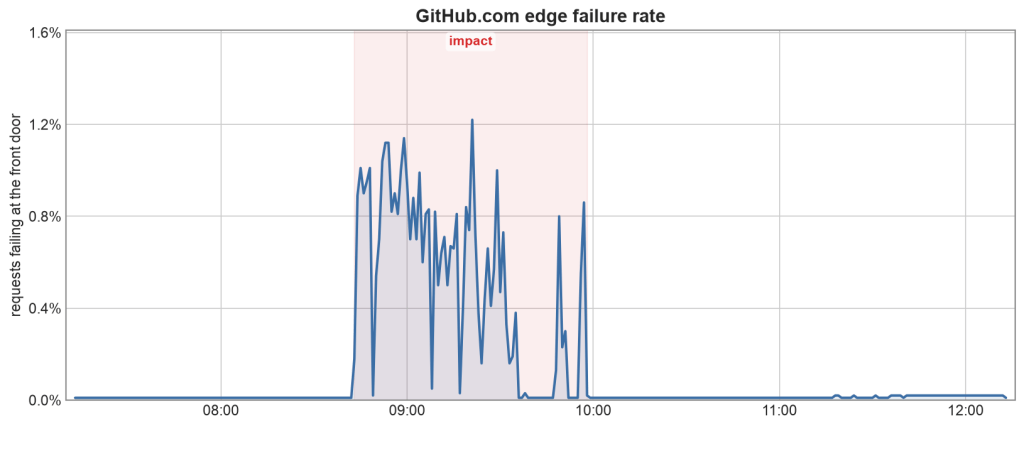
Section 1: Executive Overview & Architectural Significance
The github-availability-report-septe release marks a pivotal evaluation point in GitHub's ongoing infrastructure reliability engineering. Spanning the months of August and September, this reporting period underscores a fundamental organizational philosophy: availability takes precedence over raw capacity, which in turn takes precedence over feature delivery. Following notable incidents earlier in the seasonal cycle, the engineering organization focused heavily on remediating database bottlenecks, optimizing background operations, establishing defensive overload controls, and steadily migrating core production workloads to Azure. Despite aggressive internal targets, such as a missed September 30 deployment deadline for all production services in the Central US region, the platform achieved substantial architectural resilience.
At its core, this release report highlights systemic improvements across high-concurrency systems, notably MySQL database scaling and GitHub Actions operating headroom. By systematically reducing pressure on legacy shared databases, implementing smarter failure-containment paradigms for pull requests, and expanding Azure's regional footprint—handling over 65% of core application read traffic and 80% of stream-processing tasks—GitHub is systematically engineering out single points of failure. Nevertheless, real-world incidents, including a September 13 database connection saturation event and a September 28 Copilot code review outage, demonstrate that continuous architectural hardening remains an absolute necessity for hyper-scale developer platforms.
Section 2: Core Enhancements & Developer Ergonomics
Developer ergonomics and system responsiveness saw major uplifts due to targeted database and caching optimizations. Most notably, the engineering teams removed 24 authentication-core tables from GitHub's oldest shared database, slashing approximately one million queries per second from its replicas. Furthermore, the issue and pull request database cluster underwent a massive data sanitation effort, purging roughly 980 million unnecessary edit-history rows and reclaiming 1.8 terabytes of recoverable storage. These continuous cleaning processes successfully curbed unbounded historical data growth, contributing to a 77% drop in weekly deadlocks compared to their June peak.
GitHub Actions also received crucial operating headroom adjustments through targeted infrastructure caching. Production updates drove down measured Redis operations by approximately 28% and relative CPU utilization by about 30%. Concurrently, a dedicated infrastructure cache reduced Redis bandwidth consumption by 84%, slashed average response times by 66%, accelerated median response times for primary inventory requests by an impressive 96%, and lowered queued requests by 95%. On the resilience front, failure isolation protocols now allow approximately half of sampled pull request traffic to maintain limited functionality when a shared dependency fails, while automated routing logic dynamically scales worker groups during sudden traffic spikes.
Section 3: Architectural Comparison Matrix
| Performance Metric | Previous Baseline | github-availability-report-septe | Architectural Impact |
|---|---|---|---|
| Core Application Read Latency | High variance during peak load | Stabilized via Azure routing | 65.4% of core reads handled reliably on Azure infrastructure |
| Database Connection Load | Prone to saturation via background jobs | Defended by load-aware throttling | Prevents primary database connection exhaustion during background tasks |
| GitHub Actions Queue Depth | High queuing under high concurrency | Reduced by 95% | Infrastructure caching significantly accelerates inventory requests |
| Edit History Storage | Unbounded growth of legacy tables | 1.8 TB of recoverable storage freed | Purged 980M unnecessary rows, reducing deadlock frequency by 77% |
Section 4: Breaking Changes & Migration Caveats
This release introduces no direct breaking API changes for external developers, maintaining strict backwards-compatibility with existing REST and GraphQL endpoints. However, internal migrations and newly enforced platform governance rules introduce critical operational caveats. The aggressive regional migration to Azure Central US encountered hard stops due to uneven availability zone capacity, requiring temporary deployment pauses and structural alterations to automated emergency failover scripts. Specifically, automated processes that previously disconnected Central US database copies during planned handoffs have been temporarily disabled to prevent unexpected customer impact.
Furthermore, newly implemented production overload controls actively drop lower-priority API and web requests during high-saturation events to protect critical developer workflows. Integrations relying on unbounded retry loops or lacking exponential backoff may experience accelerated connection rejections if they flood saturated endpoints during system degradation windows.
Section 5: Step-by-Step Upgrade Guide
To align internal services and self-hosted configurations with GitHub's current availability and resilience standards, engineering teams should adopt the following operational practices:
Implement Fail-Fast Timeouts for Database Dependencies: Ensure all downstream service handlers enforce strict timeout limits when querying shared relational stores, preventing thread pool starvation during transient degradation.
import socket
from sqlalchemy import create_engine

# Enforce strict connect and read timeouts on database engines
engine = create_engine(
    "mysql+pymysql://user:pass@localhost/db",
    connect_args={"connect_timeout": 3, "read_timeout": 5}
)
Incorporate Circuit Breakers and Idempotent Retries: Update webhook and token-creation integration layers to avoid aggressive retry storms that exacerbate primary database saturation.
Tune Background Processing Safeguards: Ensure internal data-cleaning or synchronization jobs explicitly monitor primary database connection health and query load, rather than solely tracking replica lag.